Ceramic coatings promise remarkable gloss, hydrophobic behavior, and easier maintenance, but they are not invincible. They are a sacrificial layer, a hard shell that buys your paint time against the elements. How you care for that shell shapes how long it lasts and how good it looks. I have seen two identical vehicles coated on the same weekend age very differently, one still beading months later, the other dull and grabby. The difference wasn’t the product, it was the routine. Good maintenance is not complicated, yet it rewards consistency and sound judgment.
What a ceramic coating does, and where it stops
Coatings chemically bond to clear coat, wheels, gelcoat, and some interior surfaces. Most consumer and professional coatings land around 9H pencil hardness in lab testing, but that figure can be misleading. It does not mean scratch-proof. It means the coating resists marring better than waxes and sealants. Think of it as a dense, slick film that fends off light abrasions, bird droppings, bug splatter, and UV, and sheds water more readily. It slows oxidation and keeps contaminants from sticking as aggressively.
Real-world limits show up quickly. Automatic brushes will still scour, neglected iron and tar will still embed, and poor wash technique will grind grit into the layer. Coatings also vary in chemistry and thickness. A single-layer consumer product might be a few microns thick, while a multi-layer professional install can double that. Both need care. The thicker system simply buys you more headroom.
The first 24 to 72 hours matter most
Freshly applied coatings cure in stages. Most are dry to the touch within hours, but remain vulnerable for a day or two. Early mistakes often haunt the finish for months.
Avoid washing or getting the vehicle wet for at least 24 hours unless the installer advises otherwise. If it does get wet, blot water with a soft towel rather than wiping. Avoid parking under sprinklers. Hard water spotting can etch as the coating crosslinks. If dust gathers, resist the urge to quick-detail. Dragging a towel over a dusty car invites micro-marring, and the solvents in some quick detailers can interfere with early cure.
When we finish a coating at On the Spot Mobile Detailers, we schedule a courtesy check around the two-week mark. That window lets us inspect for high spots in changing light and verify that the surface behavior, like sheeting and beading, looks right. If your installer offers a similar follow-up, take it.
Wash strategy: frequency beats force
The single best maintenance choice is a consistent, gentle wash. Once a week in a dusty area, every two weeks in cleaner conditions, and always after long highway runs packed with bugs or after stormy days that leave mineral-rich water on the panels. The goal is simple, remove what sits on the coating before it bonds or dries hard.
A proper contact wash remains the standard. Pre-rinse thoroughly to knock down loose grit. A foam pre-wash helps encapsulate dirt and give you more glide. Use a pH-neutral shampoo designed for coated vehicles. The slicker the solution, the fewer micro-mars you impart. Avoid soaps with wax or gloss enhancers, they often leave residue that masks hydrophobic behavior and can gum up the surface. Rinse buckets, clean mitts, and soft drying towels are part of the plan. Contaminated tools sabotage your efforts faster than bad soap.
Touchless self-serve bays have their place during winter or when you cannot hand wash. Choose the rinse and soap cycles sparingly, skip the harsh “bug remover” option when you can, and still perform a proper hand wash when weather allows. Automated brush tunnels remain a hard no. Even “soft cloth” systems collect grit and will shred the coating’s top layer with repeated visits.
The right chemistry for a coated surface
Coatings thrive when you respect their chemistry. Strong degreasers, high-alkaline cleaners, and aggressive solvents are overkill for weekly washes and erode performance. Save dedicated tar removers, iron removers, and mineral removers for targeted use when needed.
Many modern shampoos include surfactants that rinse clean and rinse quickly. Look for products that mention ceramic-safe or coating maintenance, but do not get hung up on buzzwords. The user experience tells the truth. If the mitt feels draggy, if the rinse clings and leaves film, or if drying towels struggle, change the product.
For drying, ditch chamois. A plush, high-GSM microfiber towel or filtered air is ideal. Blowers help chase water from mirrors and emblems where drips create spots. If you use a drying aid, pick a polymer-based, coating-compatible product. Light, periodic use of a silica spray can boost slickness and gloss, but do not treat it like a crutch. If you need to “restore” behavior after every wash, contamination is building and a decon wash is due.
Spot treatment: bugs, sap, and droppings
Bugs and bird droppings are small but ruthless. The acids in droppings and the proteins in bug guts can spot even a cured coating if left long enough in heat. I keep a small bottle of coating-safe waterless wash or rinseless mix in the trunk with a few clean microfibers. Soften the spot for a minute, then dab, do not scrub. If the residue is stubborn, repeat, then wash the area at home. Sap can require a tar remover. Put it on a towel rather than directly on the panel and hold it against the sap to soften. Gentle coaxing beats brute force.
During summer highway trips we see front bumpers arrive at On the Spot Mobile Detailers with a thin armor of roasted bugs. We pre-soak with a citrus pre-wash, let it dwell, then rinse with medium pressure. Only after the majority lifts do we touch the panel. That sequence protects the coating’s topography, which in turn keeps the surface easy to clean the next time.
Decontamination without damage
Even a well-maintained coating collects iron fallout, tar, and mineral film over months. You will feel it as a light graininess or see hydrophobic behavior taper off. This is normal. A periodic decontamination routine brings the surface back without heavy polishing.
Start with an iron remover on cool panels in the shade. Work panel by panel, let it react until you see color change, then rinse thoroughly. Follow with a coating-safe tar remover if you find specks behind the wheels or on lower quarters. A carefully chosen water-spot remover can lift mineral film from glass and paint, but always test first. Some spot removers are quite acidic and can haze soft trim.
Clay is the last resort on a coated car. Traditional clay bars abrade. If you must, use a mild clay mitt with abundant lubrication, and a feather touch. Expect to lightly reduce the coating’s top layer. Plan to top with a compatible silica spray afterward. If you find yourself claying every other month, you are either parking in heavy industrial fallout or your wash routine needs refinement.
Heat, sun, and the elements
UV protection is a strength of ceramic coatings, yet prolonged baking accelerates everything you do not want, from mineral spotting to sap etching. Whenever possible, wash and dry out of direct sun. If you live with hard water, consider a simple in-line filter or deionized rinse for summer months. We measured a 100 to 300 TDS swing from municipal spigots around our service area, and the difference is visible on black paint after a single careless rinse. Shade and soft water preserve more shine than most products can add.
Seasonal realities matter too. Coastal owners fight salt spray. A weekly rinse, even if you do not have time for a full wash, is worthwhile. In snowy climates, road brine rides home in every seam. A thorough undercarriage and wheel well rinse prevents buildup that defeats wheel coating and corrodes hardware. Marine detailing teams already know this rhythm for gelcoat. The same logic applies to your daily driver.
Interior coating and fabric care
Interior coating changes the cleaning equation more than the look. On leather, vinyl, and plastics it creates a tighter pore structure and more hydrophobic surface, which slows dye transfer and eases wipe-downs. It is not a free pass for harsh cleaners. Keep pH-balanced interior products on hand and aim for frequent, light maintenance. For fabrics and carpets, coatings resist spills for a few minutes, long enough to blot rather than rub. If a stain sets, attack it early with a gentle cleaner so you do not need heavy agitation.
We coated a light gray steering wheel and shift knob for a client who commuted with a coffee in hand. Three months later, daily wipe-downs with a damp microfiber kept both pieces crisp, no shine build-up, no sticky feel. The key was restraint. Aggressive APC would have stripped the top feel, which is half the appeal of modern interiors.
Wheel coating specifics
Wheel faces and barrels run hotter and collect abrasive brake dust. A dedicated wheel coating survives better in this environment than a paint formula, but both still need their routine. Clean wheels first, with a pH-neutral wheel soap for weekly washes. Save the iron remover for monthly or as-needed use. Avoid stiff brushes on high-gloss or machined finishes. Use soft wheel brushes that carry plenty of solution into barrels and behind spokes. Dry thoroughly. Trapped water spots live longest on wheels. If your hydrophobics fade, a silica spray can serve as a light sacrificial layer between decon cycles.
A strong example came from a track-day client. His coated forged wheels cleaned up with a gentle soap after a day of aggressive pad dust. When we skipped the iron remover one month, the beading slowed but the finish still looked clean. After a targeted iron bath the next visit, beading snapped back. The coating did its job, the chemistry did the rest.
Paint correction after coating: when and how
If you notice wash marring or light swirls, paint correction is possible but requires judgment. Polishing abrades the coating along with the mark. For light defects, a fine finishing polish on a soft pad can level high spots or remove minor haze without wholesale removal. Always follow with a panel wipe and consider a top-up, either a silica spray or a fresh coating layer if the system allows it.
For deeper scratches or a dull, contaminated shell, full decontamination followed by a medium polish might be the honest answer. Expect to recoat afterward. I have seen owners chase a single scratch for hours and end up with a thinned area that behaves differently in rain. Sometimes the best move is to accept that the coating saved your clear coat and replace the sacrificial layer.
Do’s and don’ts for coated vehicles
- Do wash regularly with a pH-neutral, coating-safe shampoo, and dry with plush microfiber or filtered air. Do remove bugs, sap, and bird droppings promptly using gentle, coating-safe products. Do perform periodic decontamination with iron remover, and use tar or mineral removers only as needed. Don’t use automatic brush washes or harsh degreasers for routine cleaning. Don’t clay aggressively or polish casually, both reduce the coating and may require reapplication.
Weathered realities from mobile detailing work
Mobile detailing exposes you to the full spectrum of conditions, from hot asphalt driveways to windy marina lots. On the Spot Mobile Detailers has maintained coated cars in front yards, commercial garages, and curbside where a stiff breeze can throw grit into your rinse. The first adaptation is controlling what you can. Park nose-first into the wind during rinses so you blow loose matter away. Keep multiple wash mitts so a dropped mitt is not a crisis. Carry extra deionized water for a final rinse on darker colors when the municipal source reads high on a TDS pen.
We also see the difference between garage-kept and street-parked vehicles. A properly garaged, coated sedan can run 18 to 24 months before a full decon and top-up feels necessary. A street-parked hatchback under trees might need quarterly decon and more frequent spot treatments. Both can look exceptional if the routine matches the reality.
On the Spot Mobile Detailers: practices that keep coatings thriving
Experience changes your defaults. We learned to minimize towel passes during drying. One large, high-GSM towel for the roof and glass, a second for upper panels, a third for lowers, then a quick blast of filtered air from mirrors and emblems. Each pass is a chance to mark the surface. Breaking the job into zones drops risk while speeding the process.
For coated wheels, On the Spot Mobile Detailers pre-soaks barrels with foam through a narrow-tip sprayer, lets it dwell while washing the body, then returns with soft brushes. That dwell time is where much of the magic happens. Rushing into agitation only moves abrasive grit around. On interiors with interior coating, we prefer slightly damp microfibers over sprays. Too much liquid runs into seams and lifts dressing or leaves tide marks. A little patience and fewer chemicals go further.
Marine and RV detailing crossovers
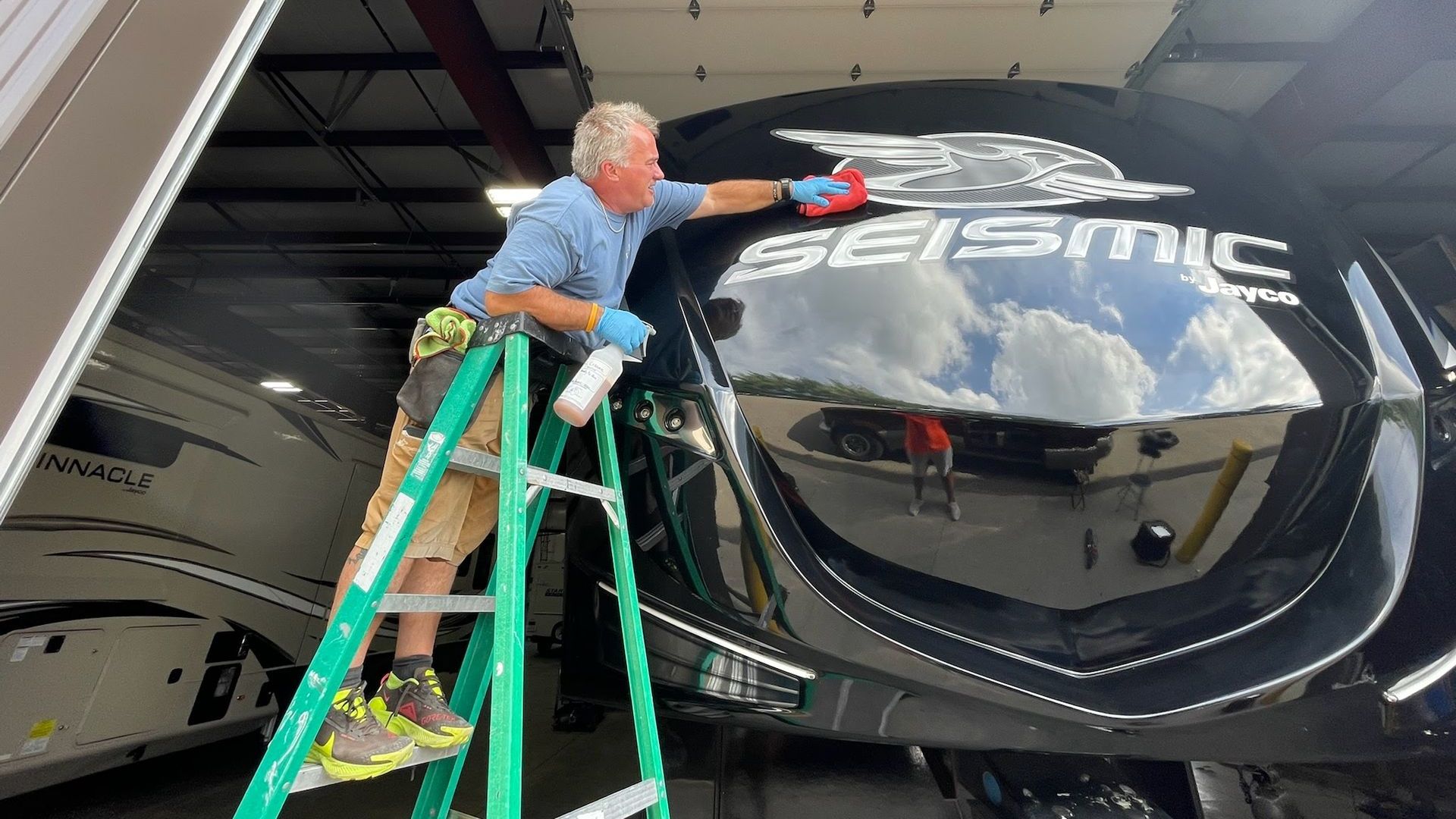
Marine detailing teaches you to respect UV and mineral content. Gelcoat loves to oxidize, and although marine ceramic coatings hold up well, they need consistent rinsing and a plan for water spotting. After a day on the lake, a quick fresh-water rinse and a silica spray wipe on hull sides keeps the next cleanup simple. The same habits translate to RV detailing. Large, vertical surfaces collect streaks. If you let them bake, you will spend twice the time removing them later. Focus on shade, soft water, and top-down rinsing. Many RV and residential coating clients invest in a basic inline filter. That small decision improves results more than any boutique product in the cabinet.
Headlight restoration and coatings
Restored headlights benefit enormously from a ceramic topcoat. Sanding and polishing clears the lens, but without protection polycarbonate oxidizes again quickly. A quality coating seals in clarity and resists UV. The maintenance mimics the body panels, gentle soap, gentle towels, and quick bug removal. Avoid solvent-heavy products near the lens edge. We have seen swelling at the perimeter where aggressive cleaners seeped under a trim seal.
For older vehicles with brittle gaskets, tape off the edges during decontamination. A minute of prep prevents a week of regrets.
Residential coating and the driveway factor
If you maintain your car in a residential setting, your resources shape the routine. Hose pressure varies, shade is limited, and storage is often shared. Set yourself up with three things: a stacking set of clean buckets with grit guards, a caddy of soft towels reserved for coated surfaces, and a small TDS tester. If your water reads higher than 150 ppm, plan your wash to finish in a single panel at a time rinse and dry sequence. Do not flood the entire vehicle, then chase spots at the end.
Homeowners who also invest in residential coating on high-touch surfaces like painted doors, railings, or outdoor kitchens learn quickly that the same logic applies. Gentle cleaners, frequent light maintenance, and periodic targeted decontamination keep coatings from loading up with grime.
When hydrophobics drop off
Beading and sheeting are signals, not grades. When they soften, do not panic. First, wash with a strong but coating-safe shampoo and warm water. Then try an iron remover. If the behavior returns, contamination was the culprit. If it does not, consider a mineral remover or a light clay mitt. As a final step, add a silica spray topper. If none of these restore performance, the coating may be at end-of-life in that area, often on horizontal panels like the hood and roof. A partial recoat is a practical option. I have split hoods before, refreshing only the sun-baked half. There is no rule that says you must strip and redo everything.
Common mistakes and how to recover
Two missteps show up often. The first is using a silicone-heavy dressing on coated trim or paint, which can streak and attract dust. If that happens, wipe down with a mild panel cleaner, then wash. The second is letting winter grime build for months. By spring, the coating looks dull and owners think it failed. A thorough decon often surprises them. Iron remover bleeds purple, tar loosens, and the old snap returns. If marring remains, a gentle finishing polish followed by a compatible topper gets you most of the way back.
Another trap is the well-meaning neighbor with a rotary buffer. A coated surface does not want heat and wool unless you plan to recoat. If someone “buffs out a scuff” and the area otsmobile.com auto detailing suddenly stops beading, you know what happened.
On the Spot Mobile Detailers: lessons from field calls
Field calls educate quickly. We once responded to a black SUV whose owner washed with dish soap and a stiff brush for a month after a coating install. The panels were matte with micro-marring. The remedy was straightforward, if a bit humbling. We decontaminated, performed a single-step polish with a fine pad, reinstated gloss, and reapplied a fresh coating. The owner adopted a kinder wash routine, and the finish held up beautifully across the next winter. That case reinforced a simple truth we share with every client: it is not about babying the car, it is about using the right tools and a steady rhythm.

Another visit involved a boat that lived two slips from a cement plant. Fallout covered the hull weekly. A switch to a biweekly rinse schedule and monthly iron decon kept the marine coating performing, saving hours of scrubbing and protecting the gelcoat from chalking. Sometimes the environment dictates the calendar, not preference.
Putting it all together
Ceramic coatings make maintenance more forgiving, not optional. A gentle, regular wash prevents the battle with bonded grime. Thoughtful chemistry preserves the top layer. Occasional decontamination renews the slick feel and water behavior. Accept that correction work removes coating, so reserve it for when it matters. Recognize how lifestyle, parking, and water quality influence the plan. Owners who embrace these realities enjoy years of gloss and easy cleaning without chasing every new product that hits the shelf.
For those who rely on mobile detailing, choose teams that respect the surface and control variables. On the Spot Mobile Detailers built systems for shade, water quality, and tool hygiene because consistency beats any single miracle product. Whether we are finishing a paint correction and ceramic coating on a street-parked coupe or maintaining wheel coating on a daily-driven SUV, the habits do the heavy lifting.
A coating’s job is to take the hit first, so your paint, wheels, headlights, and interior live cleaner, longer. Your job is to give that sacrificial layer a fair chance to do its work. If you handle the week-to-week, the coating will repay you every time the rain rolls off and the towel glides instead of grabs.